
Welcome
What if the universe wasn’t built from smooth, empty space at all?
Imagine instead an enormous living grid — a hidden structure of FrostNodes, connected by elastic FrostSegments and directional FrostLines. Matter, light, gravity, and even the passage of time would not need to be separate mysteries. They could all be different ways that one underlying cosmic structure moves, bends, twists, stretches, locks, and changes.
In the Frostyverse, particles are not tiny magical dots and forces are not invisible hands reaching across nothingness. Everything has a place in the grid. Light propagates through FrostCells while its completed state advances from FrostNode to FrostNode. Matter forms stable patterns. Gravity-like behavior is explored through FrostGrid deformation and radial strain. Electromagnetism is explored through torsional structure. Even the strange behavior of entangled particles can be explored as part of the geometry connecting their states.
And this is where the real fun begins. You’ll discover new ways to imagine ideas that normally seem impossible to picture. Could something as mysterious as a quark turn out to be as simple as a single FrostNode pushed to an extreme state? Could General Relativity and Quantum Mechanics begin to fit together if gravity and particles are both behaviors of the same underlying grid? Could even the direction of time itself change which forms of matter are naturally favored? In the Frostyverse, those questions become mechanical things you can actually try to picture.
That idea leads somewhere surprisingly big: perhaps the universe does not need a different fundamental story for gravity, quantum mechanics, electromagnetism, the strong force, the weak force, and time. Perhaps they are different faces of the same underlying machine — one simple set of ingredients producing an incredibly complicated reality.
The Frostyverse is an invitation to explore that possibility. You do not need to be a physicist, and you do not need to know the mathematics before entering. Start with a mental picture of the FrostGrid, follow the mechanics, challenge the ideas, and see how far a universe built from one energy, one elastic grid, and one set of rules can go.
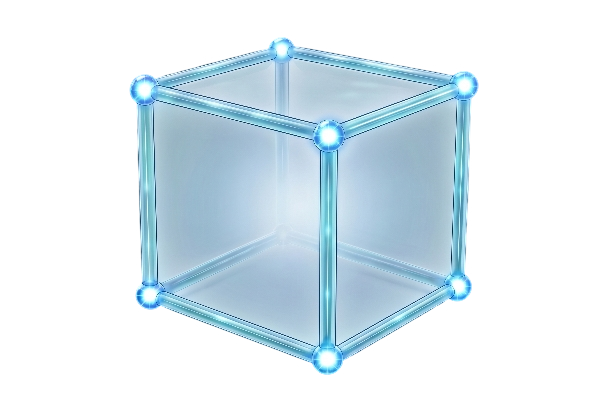
Frostyverse Vocabulary
Build the FrostGrid. Pick a word and watch the pieces assemble. The names are strange for about thirty seconds — then they become a mechanical language for picturing the universe.
FrostNode
FrostGrid Mechanics
Pull it. Twist it. Compress it. Watch physics emerge.
For these demonstrations, picture FrostSegments as the elastic connections between FrostNodes. They can stretch, compress, bow, twist, and deform the FrostCell geometry around the FrostSpace where FrostTransit occurs.
Gravity
Radial strainIncrease the strain and neighboring FrostNodes draw closer while the FrostSegment between them compresses and thickens.
Electromagnetism
Torsional strainInstead of squeezing a FrostSegment, the electromagnetic candidate changes its handed twist. Slide left or right to reverse the torsional chirality.
Strong Interaction
Compression lockDrive a FrostSegment toward extreme compression. The Frostyverse has explored whether an extreme near-FrostMin configuration could enter a locked regime rather than behaving like an ordinary elastic spacing.
Weak Interaction
ReconfigurationThis speculative control illustrates a possible reconfiguration picture: increasing structural asymmetry eventually forces an organized state to change rather than deform indefinitely.
FrostTransit Guidance
Concept view · carried vector + local carryThis conceptual view shows a FrostQuanta keeping the physical direction carried from its previous FrostTransit while a distributed local FrostSegment carry response biases its route through FrostSpace. Click any exit FrostNode except the entry node, then press Play. Each later transit preserves the carried direction rather than choosing a fresh random vector.
Light / Completed-State Timing
Simplified timing schematicThis timing-only animation isolates completed source-node → destination-node timing. The guided FrostTransit demonstration above shows the current geometric picture: the FQ travels through FrostSpace inside the active FrostCell and does not ride along the FrostSegment drawn between the nodes here.
FrostStar Mobility
Conceptual structure migrationA FrostStar can be pictured as migrating by changing which fixed FrostNodes participate in its organized saturated structure. The exact free-FQ escape and FrostNode opening/closure law is still unresolved, so this visualization is a structural-migration concept — not a completed event-horizon mechanism.

FROSTCANDY’S LABORATORY
Don’t just read the Frostyverse — try to break it.
Historical Version 1 is permanently published on Zenodo — View published record · DOI: 10.5281/zenodo.21854770
The current website and Laboratory incorporate later terminology and preserved research through the publication checkpoint including H2-092. For current reproducibility material, use the Laboratory downloads; the Version 1 manuscript remains unchanged as the historical publication.
Drop it into your favorite AI, press Send, and start exploring.
You don’t have to read 100 pages first. Ask a question and see what the Frostyverse does with it.
Try asking…
Click any question to copy it, then paste it into your AI chat.
Predictions
Okay — suppose the FrostGrid really works.
What strange things should we go looking for? These are not trophies on a shelf. They are places where the Frostyverse can eventually be tested, broken, or turned into very good science fiction.
The Three-Body Problem? Why stop at three?
If gravity can be expressed as exact discrete updates, could a FrostGrid N-body simulator forecast chaotic systems differently from today’s numerical methods — and then be checked against later observations?
One Galaxy. One Gravity Map.
A real unification should not need one trick for star motion and another for bent light. Can the same three-dimensional FrostGrid deformation field explain galaxy rotation and lensing together?
Cold Places in the Cosmic Grid
Could broad regions of unusually stretched FrostSegments and deformed FrostGrid geometry alter how background energy is distributed or observed, leaving colder patches in the cosmic microwave background?
Does Entanglement Have an Edge?
FrostTanglement does not require infinite range. If coherence eventually weakens with distance or environment, could there be a measurable breaking point beyond ordinary decoherence?
Can We Catch the FrostGrid Moving?
Send otherwise identical precision clocks in opposite directions, remove the familiar relativistic and gravitational effects, and ask whether any tiny direction-dependent residual remains.
Redshift Without Expanding Space?
Could one frozen photon-transport rule stretch energy, frequency, and observed time together over immense distance while preserving sharp images and the rest of cosmological observations?